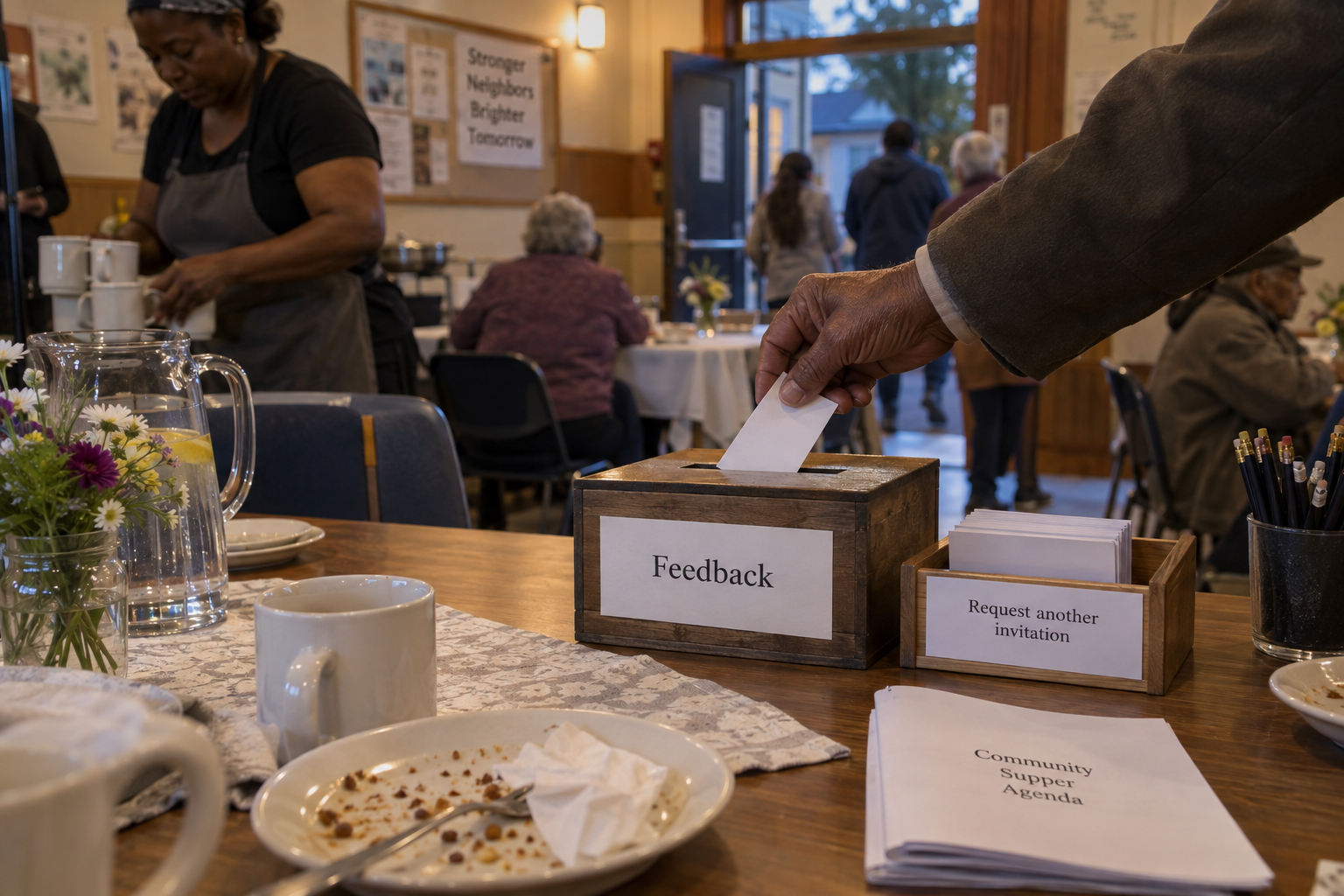
For first-time volunteer hosts, learning how to host a Christian gathering starts with one clear purpose, an honest invitation, and a plan that respects each guest’s choices. Choose whom you want to serve, prepare a welcoming space, and make participation and follow-up optional. Attendance matters for planning, but it cannot tell you whether people felt included or knew what to do next.
You do not need a polished production. You need clear responsibilities, realistic costs, and attention to the person who arrives alone. Christian hospitality becomes tangible through those decisions.
Use a five-part hosting framework
Build your plan around five actions: purpose, preparation, welcome, permission, and review. Keep them on one shared planning page so volunteers can use it during the gathering.
- Purpose: Name one outcome and the people it serves.
- Preparation: Confirm the space, costs, access needs, timing, and responsibilities.
- Welcome: Explain what will happen and provide comfortable ways to participate.
- Permission: Ask before collecting details, sharing stories, taking photos, or contacting guests.
- Review: Check whether guests felt welcome and whether promised actions happened.
Choose one purpose and a specific audience
“Bring people together” is a hope, not a planning decision. A useful purpose identifies what guests should experience or leave with.
We are hosting a neighborhood supper for adults who are new to the area, so each guest can meet someone nearby and choose whether to attend another conversation.
This purpose guides the venue, invitation, seating, and follow-up. A gathering for parents seeking friendship needs a different plan from a volunteer service briefing or a Bible study.
Write down what the gathering is not. A friendship supper should not become an undisclosed fundraising pitch. A community service invitation should not turn into a required worship service. If Scripture, singing, or prayer will be included, say so before people arrive.
If another organization is helping, agree on who invites guests, handles expenses, and owns follow-up. Exploring ongoing collaboration? The Avodah Dynamics partners page is a separate next step; your local event still needs named responsibilities.
Prepare the practical details before inviting guests
Check the space and access
Walk through the venue as someone visiting for the first time. Can guests find the entrance, reach the meeting room, use the restroom, and leave without assistance? Check lighting, seating, noise, transport options, and any steps or narrow doorways. Describe known limitations rather than simply calling the venue “accessible.”
Offer a private way to request accommodations or dietary arrangements. Ask what would help someone participate, not for a diagnosis. Confirm what you can provide, and communicate any limits before the event.
Set a spending ceiling and name responsibilities
List venue costs, food, supplies, access arrangements, and a contingency amount. Decide who can approve spending and how volunteers will be reimbursed. If you need help organizing those decisions, use the Christian budget tools guide as a planning reference.
Assign a lead host, a door greeter, and a logistics contact. One person can cover multiple roles in a small gathering, but nobody should have to guess who handles a spill, a late arrival, or a distressed guest. Include setup and cleanup time in volunteer commitments.
Plan for safety and boundaries
Confirm venue capacity, exits, emergency procedures, and who will respond if someone needs help. Keep walking routes clear. Label known food ingredients and avoid promising an allergen-free environment unless you can substantiate it.
If children or adults at risk will participate, follow your organization’s safeguarding policy and applicable local requirements. Confirm supervision, screening, reporting procedures, and any check-in arrangements before inviting families. Do not improvise childcare with an unprepared volunteer. If childcare is unavailable, state that clearly.
Write an invitation without hidden expectations
An invitation should explain who the gathering is for, its Christian context, what participation involves, and the practical details. Here is sample wording to adapt once arrangements are confirmed:
You’re invited to a neighborhood supper hosted by local Christian volunteers. We’ll share a simple meal, talk in small groups, and offer a short optional prayer. You do not need to belong to a church or share our beliefs. There is no charge or donation request. We’ll meet Saturday, 5:30–7 p.m., in the community hall. The side entrance is step-free; contact the host about access or dietary needs. This gathering is for adults, and childcare is not provided. RSVP for food planning; contact details will be used for event arrangements only unless you separately request follow-up.
Only make promises your team can keep. Include the actual address and a host contact in the final version. Do not add respondents to a mailing list because they asked for directions.
Build a simple agenda with room to decline
A 90-minute gathering can feel unhurried without leaving guests wondering what happens next:
- First 10 minutes: Greet arrivals, point out restrooms and refreshments, and offer introductions without forcing them.
- Next 10 minutes: Explain the purpose, schedule, and participation choices.
- Next 35 minutes: Share food and conversation using one or two accessible prompts.
- Next 15 minutes: Invite reflections and offer a brief optional prayer.
- Next 10 minutes: Explain next steps and how to request contact.
- Final 10 minutes: Close on time, thank guests, and allow relaxed departures.
Try prompts such as “What has helped you feel at home somewhere?” Let people pass. Avoid requiring testimony, public prayer, or disclosure of personal difficulties.
Before prayer, say: “I’ll offer a short Christian prayer. You’re welcome to join, listen quietly, or step out.” Do not single out people who decline. Optional participation must remain optional in practice, not just in the invitation.
Worked example: a neighborhood welcome supper
Imagine three volunteers planning for 18 adults in a borrowed hall. Their purpose is connection, not recruitment. They set an illustrative budget of $180: $110 for food, $25 for drinks, $15 for supplies, and $30 for contingencies. Local prices and venue costs will change that calculation.
One volunteer handles invitations and access requests. Another manages food and setup. The third greets guests and facilitates conversation. They use three small tables rather than one long table so guests can hear each other more easily.
At closing, the facilitator offers two choices: request details about another supper or leave without further contact. An optional card asks, “Did you feel welcome?” and “Was your next step clear?” Contact requests go on a separate slip so feedback can remain anonymous.
Suppose 14 people attend, nine return feedback, and five request another invitation. Two respondents say they struggled to hear. The hosts should not conclude that everyone felt included. Their next actions are concrete: contact the five people as requested, try a quieter room, and keep the schedule that guests said worked.
Protect privacy and follow through with permission
Collect only what you need. An RSVP might require a first name, party size, and contact method. Sensitive prayer requests should not sit beside the public attendance sheet.
Use separate choices for separate purposes: “Send me details of the next supper” is different from “Add me to ongoing updates.” Explain who can access the information and when it will be deleted. Avoid an open sign-in sheet that exposes everyone’s details.
Ask before photographing identifiable guests or publishing their stories. For children, follow your safeguarding policy and applicable consent requirements. Do not promise absolute confidentiality when a safeguarding concern may require reporting.
Within the timeframe you promised, send requested information with a clear way to stop further contact. If someone wants a referral, ask permission before sharing their details. Providing an organization’s contact information may be enough; you do not always need to make an introduction.
Review welcome, clarity, and completed actions
Debrief with volunteers while details are fresh. Record attendance for logistics, then examine the experience: what feedback said, where participation was difficult, and which commitments remain unfinished.
Assign an owner and deadline to each promised action. Distinguish “information sent” from “connection confirmed”; a referral is not proof that someone received support. Record anonymous feedback as themes rather than building unnecessary personal profiles.
Frequently asked questions
How many people should I invite?
Start with the number your venue and volunteers can comfortably support. Set an RSVP limit based on seating, food, access, and safe capacity—not an attendance target you feel pressured to reach.
Can people attend if they are not Christian?
For an open community gathering, explicitly welcome them and explain the Christian elements. Do not assume familiarity with church language or treat attendance as agreement with your beliefs.
What if nobody wants follow-up?
Respect that choice. A worthwhile gathering can end with a meal and a good conversation. Review whether the next step was clear, but do not chase guests to create evidence of impact.
Ready to choose your next setting for connection? Visit the Avodah Dynamics events page, then use this framework to clarify the purpose, welcome, and next step for the gathering you plan to host.