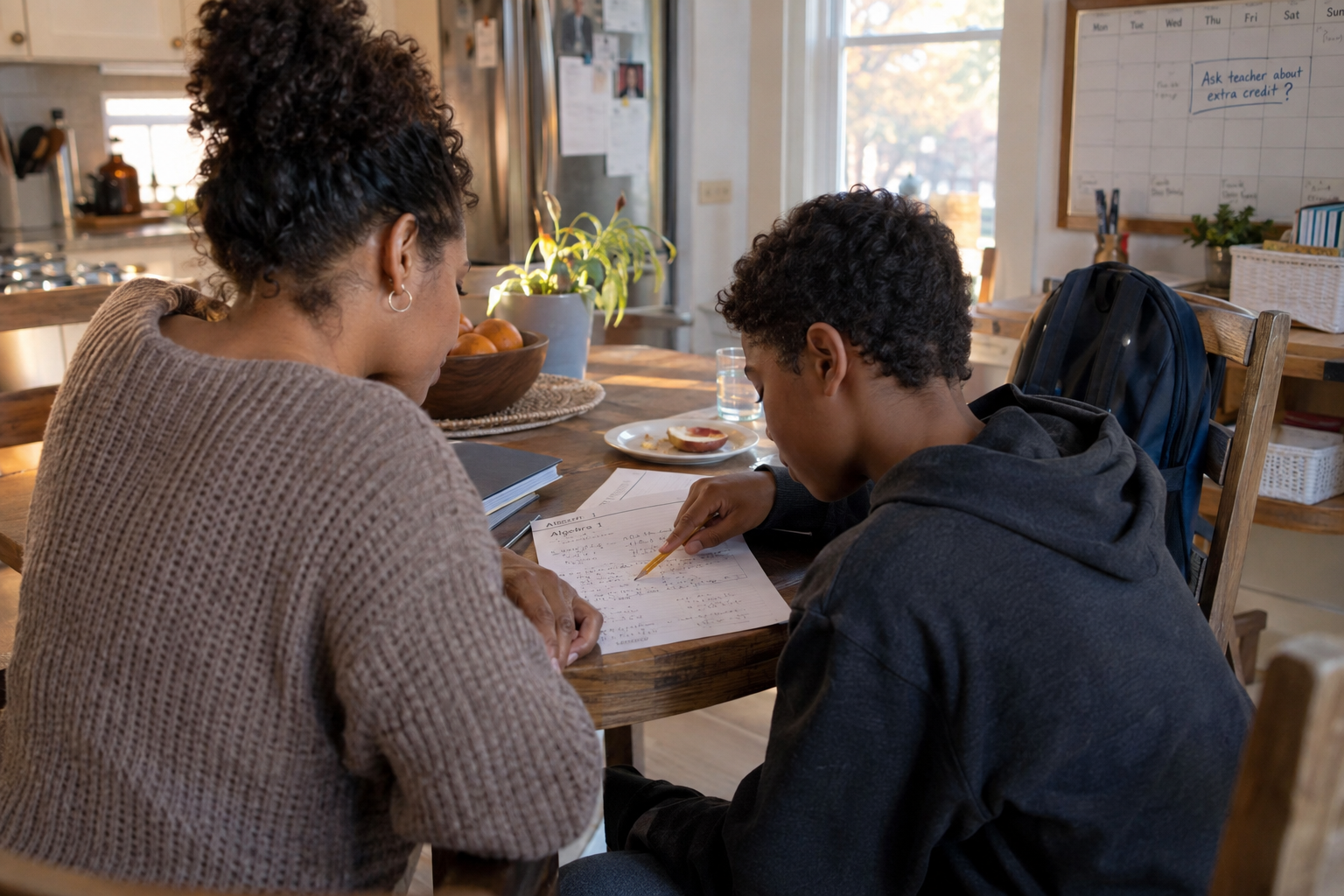
For Christian parents of middle-school students, speaking life over your family means telling the truth with compassion, listening before correcting, and following encouragement with practical support. It is not a way to control grades, friendships, or the future. When your child faces a school challenge, the goal is to help them feel known, accept appropriate responsibility, and take a manageable next step.
“You’re going to do amazing” may be well intended. But after a failed test, a more useful response is: “This grade hurts. It doesn’t define you. Let’s understand what happened and decide what help you need.” That statement offers hope without asking your child to deny reality.
What speaking life means—and what it does not
In a Christian home, life-giving speech grows from the conviction that a child’s worth is not earned through performance. Prayer, blessing, correction, and encouragement can all express that conviction. None requires pretending that every situation will end the way you want.
You can pray for wisdom before a teacher conference without promising a changed grade. You can remind your child that God loves them while acknowledging that an apology is necessary. Faith leaves room for grief, uncertainty, effort, and help from other people.
The distinction is not between positive and negative language. It is between language that helps your child face reality and language that makes reality harder to discuss.
- Encouragement: “You asked for help even though you felt embarrassed. That was a responsible choice.”
- Pressure: “You’re too smart to get grades like this.”
- Denial: “Don’t say school is hard. We only speak success in this house.”
- Truthful hope: “School feels hard right now. We can name what’s difficult and look for support.”
Even praise can create pressure when it assigns a role your child must keep performing: the gifted one, the easy one, the future leader. Name a specific action instead. Leave room for your child to struggle without losing their place in the family.
A four-step framework: notice, listen, affirm, act
Use this sequence when a school problem surfaces. It is a guide, not a script you must finish in one sitting. If either of you is overwhelmed, pause and agree on a time to return.
- Notice without labeling. Describe what you know: “I see three assignments marked missing.” Avoid turning an observation into an identity: “You’re becoming lazy.”
- Listen for the obstacle. Ask, “Walk me through what happened.” Then make room for the answer. Is the difficulty understanding directions, starting, submitting work, managing time, or something else?
- Affirm worth and name responsibility. Say, “I love you, and this is something we need to address.” When appropriate, identify an effort you actually observed—not a flattering claim you cannot support.
- Act on one next step. Choose an action, an owner, and a time: “You’ll draft a question for your teacher tonight. I’ll help you review it after dinner.”
Ask whether your child wants listening or problem-solving first. Their preference does not remove your responsibility to intervene when necessary, but it can shape how you begin. Sometimes the most useful first response is five quiet minutes rather than five solutions.
Three school challenges, with words and follow-through
Academic setbacks: separate the grade from the child
After a low score, avoid both “It doesn’t matter” and “How could you let this happen?” The grade may matter significantly. It still does not measure your child’s whole identity.
“I can see you’re disappointed. This result tells us something needs attention, not that you’re incapable. Which part felt hardest: understanding the material, preparing, or taking the test?”
Support step: Review the returned work together, if available, and identify one pattern. Help your child write a specific question for the teacher, such as, “Could you show me where my steps went wrong on this problem?” Ask what support or revision options exist rather than assuming they are available.
Conflict: validate feelings without excusing harm
Your child may be hurt and still have acted hurtfully. Speaking life makes room for both truths. You do not need to label another student a villain to stand beside your own.
“Being left out hurt. I understand why you were angry. Posting that comment added harm, though. Let’s talk about what happened and what you can repair.”
Support step: Help your child draft an apology that names their action without blaming the recipient. If the situation involves threats, repeated targeting, or safety concerns, contact the appropriate school adult rather than leaving your child to resolve it alone. Supporting connection also means making time for family relationships alongside other responsibilities.
Uncertainty: offer companionship instead of predictions
A middle-school student may worry about making a team, changing schools, or finding friends. “Of course you’ll get in” promises something you cannot know.
“I hope this works out the way you want. I don’t know what the decision will be. Whatever happens, I’ll listen, and we’ll think through your options together.”
Support step: Separate what your child can influence from what they cannot. Put the application deadline or practice time on the calendar. Discuss another option without treating it as proof that you expect failure. If they want to pray together, ask for courage and wisdom rather than presenting prayer as a guarantee of selection.
A worked example: “I’m just bad at math”
Imagine your seventh grader drops a quiz on the kitchen counter. The score is 54 percent. “I’m just bad at math,” they say, then reach for their phone.
Your first impulse might be a lecture about studying. Instead, you say, “That looks discouraging. Do you want a few minutes, or can we talk now?” You agree to return after a snack.
When you sit down, you ask what happened. Your child says they understood the examples in class but got lost when working alone. You resist saying, “But you told me you understood.” You ask them to show you where the confusion started.
Together, you notice that they could begin several problems but could not explain the next step. You respond: “You showed me exactly where you got stuck. That gives us a useful question. This score needs attention, but calling yourself bad at math doesn’t tell us what help you need.”
The plan stays small: your child will ask the teacher about that step tomorrow; you will help write the question tonight. On Thursday, you will check whether they received an explanation and what remains unclear. You do not promise a higher score on the next quiz.
If they follow through, acknowledge that specifically: “You asked even though you felt nervous.” Noticing small wins does not mean lowering expectations. It means recognizing useful action before the final result arrives.
Make it a weekly family practice
Set aside 15 minutes at a predictable time—not only when something goes wrong. Keep the check-in separate from a full review of grades. Let each person, including adults, answer these questions:
- What felt heavy this week?
- What effort or kindness did someone notice?
- What is one thing you need help with next week?
Choose one support commitment and write down who will do what, by when. Parents should take assignments too: contacting a counselor, protecting a quiet work period, or listening without interrupting. At the next check-in, ask whether the support helped—not simply whether the child performed better. Close with a brief prayer if your family welcomes it, without making anyone perform gratitude or optimism.
Frequently asked questions
Does speaking life mean avoiding consequences?
No. State consequences calmly and connect them to the behavior. “You used your phone during the study time we agreed on, so it will stay in the kitchen tomorrow.” Avoid shame, threats about the future, or withdrawing affection.
What if my child rejects encouragement?
Do not demand that they accept it. Try, “That sounded like a pep talk when you needed me to listen. Let me start again.” Offer space, remain available, and follow through on practical help.
What if school struggles keep repeating?
Repeated difficulty deserves investigation, not louder affirmations. Bring concrete observations to the teacher or school counselor and ask about appropriate support. Do not assume a diagnosis—or assume that greater effort alone will solve the problem.
For your next step, explore growth mindset and lifelong learning, then bring one question to this week’s family check-in: “What support would make your next step more manageable?”